


Coffee Waste Management
Share:
Based on the research published by R. Hirschmann on March 22, 2021. Indonesia’s coffee consumption has almost quadrupled since 1990, by reaching the equivalent of 288.360 tons of coffee in 2019/2020. This amount of coffee certainly has an effect on the waste issue. The higher consumption level does not mean good, but it has bad consequences behind the benefits collected. Especially if the coffee waste is not well-managed. In 1000kg cherry produce about 400kg wet waste pulp. Coffee pulp/husk contains some amount of caffeine and tannins, which makes it toxic resulting in disposal problems.

To prevent the uncontrolled accumulation of coffee waste, this coffee waste can be used as follows:
- Used for composting
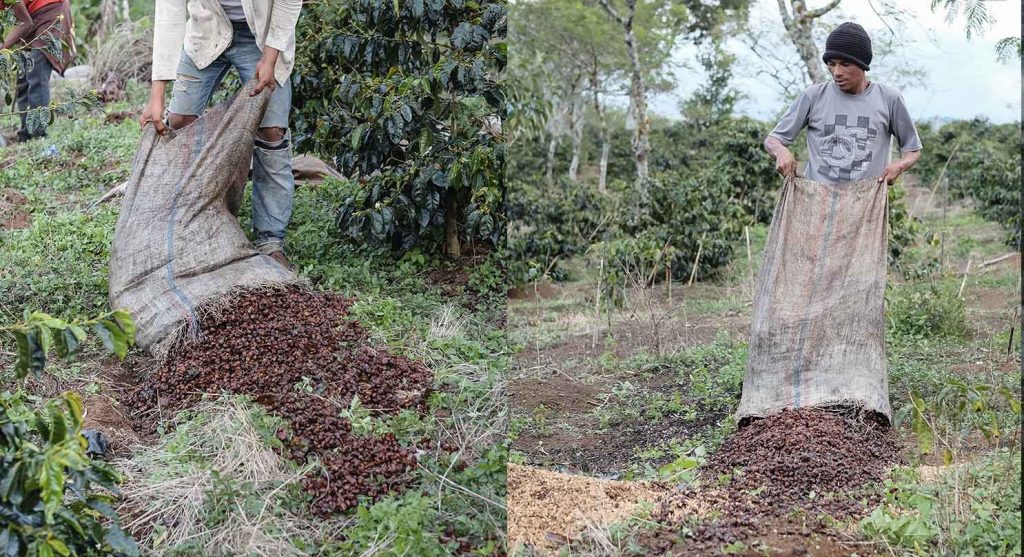
Coffee pulp is a source of nutrients: 0.5% of composted pulp is nitrogen, 0.15% is phosphorus, and 0.5% is potassium. Therefore, the coffee pulp was treated and used as organic fertilizer. The pulp left in piles, for 3 to 12 months, turns into rich, black humus that can be used for composting. The use of organic fertilizer helps to improve soil properties and also helps to reduce the need for inorganic fertilizers, hence saving farmers money.
- Mushroom production
The coffee pulp can be used as planting soil for mushroom production. By fermenting the coffee pulp and soaking the coffee pulp by using hot water and drained thus mixed with mushroom spores into a hanged food-grade plastic bags. The mushroom will grow out of the plastic holes after 3-4 weeks. - Cascara Tea
Cascara is found somewhere at the intersection of coffee and tea. It comes from coffee plants, however, it does not taste anything like coffee. It has sweet characteristics, fruity with notes of rosehip, hibiscus, cherry, red current, mango, or even tobacco. Based on the study, cascara is having a lower content of caffeine due to the ratio between the cascara and water. The highest caffeine content from cascara came in at 111,4mg/L, compared to a broad range of about 400-800 mg/L in brewed coffee (Anette Moldvaer, Squire Mile Coffee).
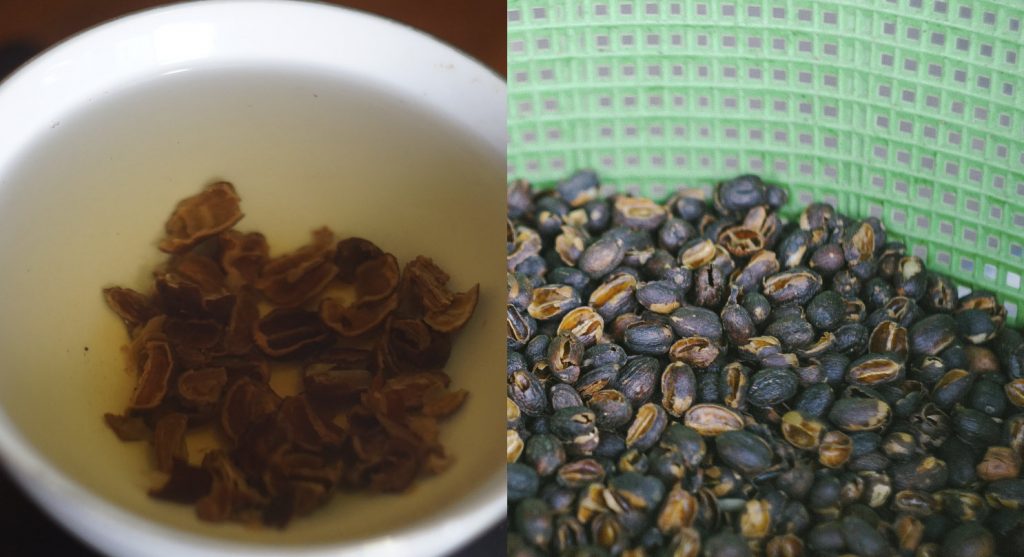
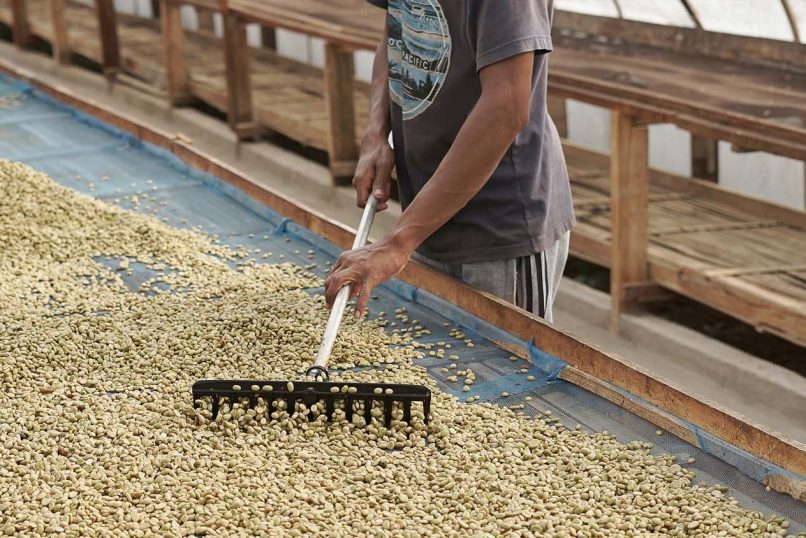
Cascara is simple a coffee pulp or husk collected from coffee fermentation and dried using natural sunlight. The variation of drying time will be defined by the coffee fermentation process used. If using Natural process, the drying process will take about 3 weeks (waiting for the natural drying in coffee done) and if using a Honey, or Washed process, after the coffee cherries pulped by using pulper, the coffee pulp or husk is collected and dried under the sunlight for about 2-3 days.
To make a cascara drink, just use 5-7 grams of cascara with 240ml of boiled water. You can add honey, ginger, nutmeg, or cinnamon for an extra flavor. Or if you want a cold beverage, just use 10-15 grams of cascara with 300-350ml of cold water, let it stand in the fridge for 24 hours. Or even you can brew the cascara by using the same method from manual brewing coffee such as French press, Hario V60, Clever Dripper.
Related Articles


Green Bean Producer | Coffee Shop | Roastery | Coffee Consultant & Services | inquiry@blancocoffee.id | Always trying to bring the best coffee experience to you